
Celebrating 35 Years of Building Expertise, Together
The National Weather Service and UCAR established the COMET Program in 1989 as a five-year project to support the Modernization and Associated Restructuring initiative. 35 years later, we’re still shaping education, training, and capacity building across the Earth System Sciences thanks to the support of our sponsors, partners, and learners.
Meteorology’s Quiet Revolution
In early April 1974, a “superoutbreak” of 150 tornadoes left a path of destruction across 13 states, killing 314 people. This event sparked the creation of the Modernization and Associated Restructuring (MAR) of the U.S. National Weather Service (NWS), a turning point in the history of the NWS that revolutionized the field of weather forecasting.
During MAR’s implementation in the 1990s, new automated surface observing stations (ASOS) replaced older technologies. These stations, still the standard today, feature a suite of sensors that continuously measure and report weather-data. ASOS were built across the United States, often near universities, and they were configured to meet the needs of their specific region.
Along with increasing the accuracy of weather forecasts, the new technologies brought even more change to the NWS. NWS forecasting operations were decentralized as weather forecasting offices (WFO) were opened near the new ASOS—and their adjacent universities. This helped foster the growing relationship between academia and weather forecast operations. In addition, forecaster workstations were improved to accommodate new satellite data and more robust computer power needed for improving the accuracy of weather forecasts.
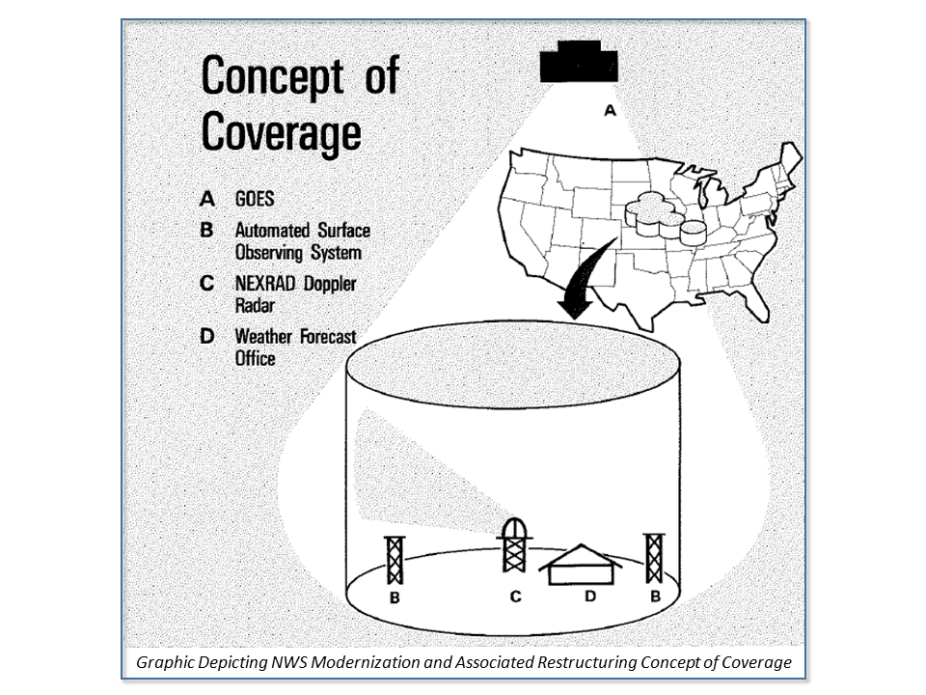
The eight-year national plan to modernize the National Weather Service was announced in 1989. This $4.5 billion overhaul changed the entire operations of the agency, improving capabilities to protect lives and livelihoods.
Meteorology Enters the Mesoscale Era
Better data meant better forecasting of mesoscale events (weather events that cover a smaller area and last less than a day, like clusters of thunderstorms ), along with the larger synoptic scale events (weather events that cover a wider area for several days, like winter storms).
These advancements in forecasting, however, created a growing question for the NWS: how will forecasters learn to interpret and apply this inundation of new data?
Launching The COMET Program
This question was answered in late 1989 after the NWS approached the University Corporation for Atmospheric Research (UCAR) to establish a professional development program in mesoscale meteorology. This request launched the Cooperative Program for Operational Meteorology, Education, and Training (COMET), housed within what is now called UCAR Community Programs (UCP). COMET would primarily be funded by the NWS, but would reside at UCAR in Boulder, Colorado, to take advantage of its strong research and academic communities, a key component of MAR.
COMET Revolutionizes Meteorology Education & Training
The 1989 memorandum of understanding (MOU) between UCAR and the NWS for the COMET Program laid out four objectives:
- Support the professional development of forecasters and hydrologists by providing classroom and distance learning training that leverages the expertise of research scientists and academicians;
- assist in transferring research results to operational forecasting practice by supporting the development and testing of new forecast methods;
- promote the collaboration of forecasters, researchers, and members of the academic community to improve operational forecasting; and
- advance weather forecasting and nowcasting by encouraging progress in basic and applied research.
Our first COMET team, under director Bill Bonner (former NWS National Meteorological Center director), created three internal programs to accomplish these objectives: residence (in-house learning), distance learning, and outreach.
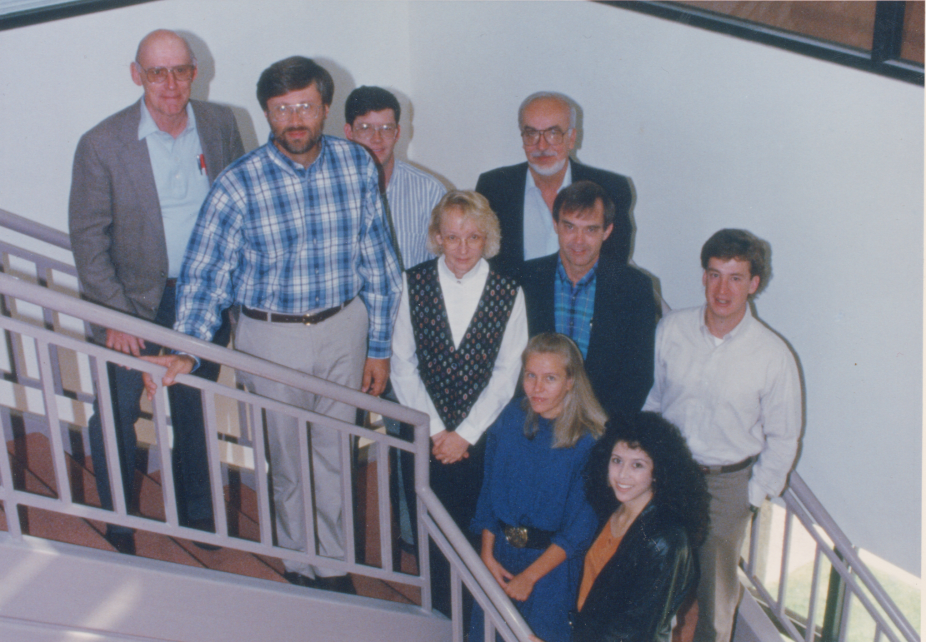
First photo of the COMET staff. (left to right) Charlie Chappell, Tim Spangler, Dwight Owens, Susan Jesuroga, Bill Bonner, Brian Heckman, Hanne Mauriello, Jim Bryant, and Kristi Gomez. Not shown is Wendy Schreiber-Abshire who was initially on loan from the NCAR Research Applications Program.
The residence program provided mesoscale training to forecasters at the COMET classroom in Boulder, Colorado, and at its peak held up to 35 weeks a year of classes, workshops, and symposia. The outreach program (now called the University Partnership Program) was established to provide funding for collaborative research projects between forecast offices and universities to facilitate the transfer of research results to operational practice. These programs are still in effect today.
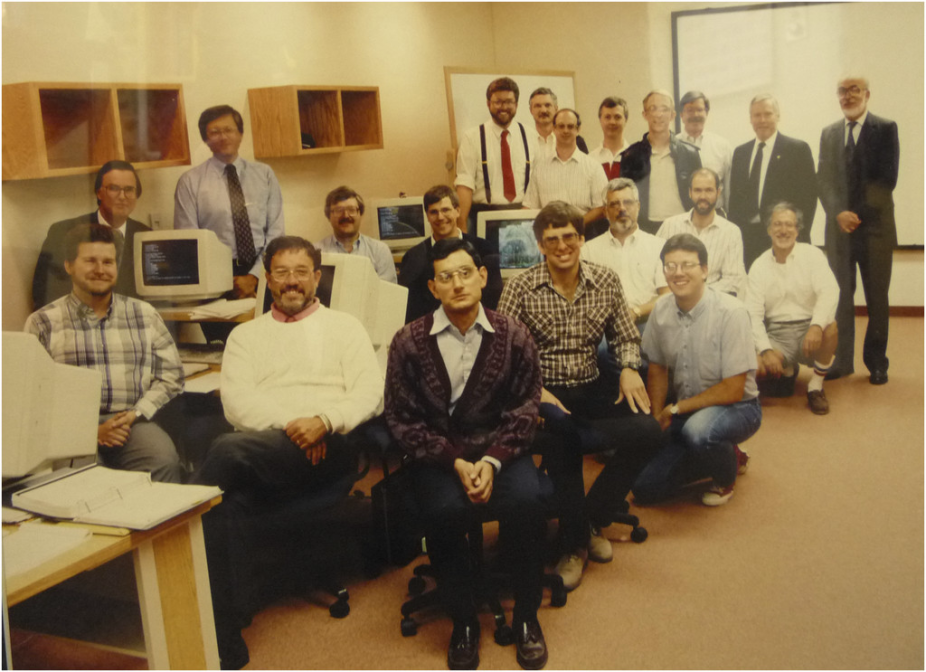
Our first COMET Mesoscale Analysis and Prediction course (COMAP) class in 1991 as part of our residence program. This eight-week course provided NWS science and operations officers (SOOs) with a graduate-level review of mesoscale meteorology.
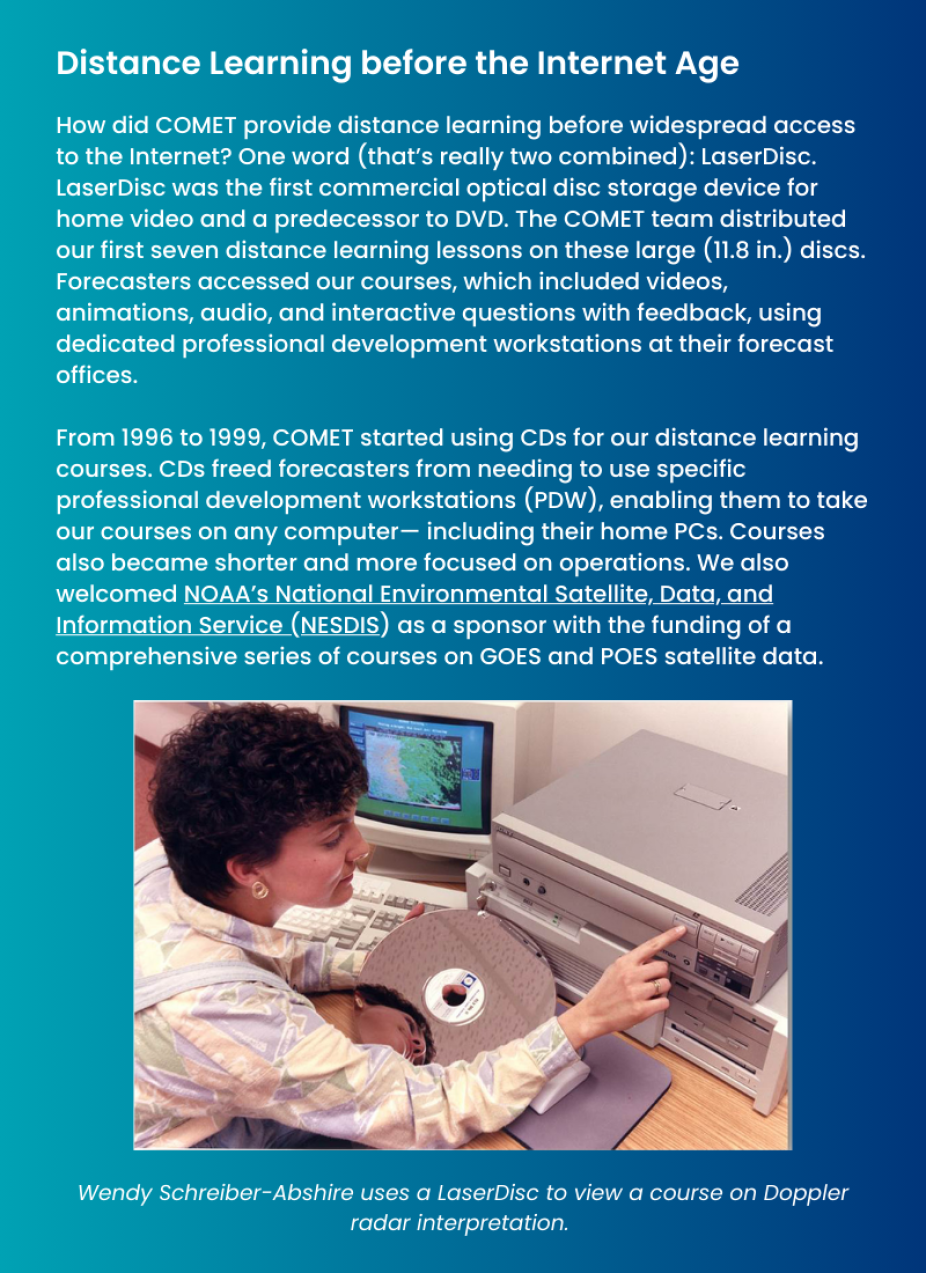
While the residence and outreach programs had a significant impact, our distance learning program truly revolutionized meteorological education and training. Computer-based learning (CBL), rarely available in the 1990s, enabled COMET to provide vital education and training to NWS and military forecasters anywhere in the United States. COMET helped move meteorological education into the digital age with 3D animations of phenomena that were previously described with 2D illustrations in textbooks.
This animation from 2015 of the hydrologic cycle is an example of one of many ESS phenomena that COMET visualized for MetEd learners.
The Creation of MetEd
The rise of the Digital Age transformed COMET’s computer-based learning approach. In 1997, we launched MetEd, a free online repository of learning courses that would not only become a renowned online learning platform, but would eventually become synonymous with COMET itself in the meteorological education and training world. MetEd also became a popular resource for university classrooms, with students making up about 40 percent of MetEd users in 2025.
COMET Redefines Geosciences Education & Training
MetEd’s growth skyrocketed within a few short years. By 2002, COMET MetEd had 85 courses with an estimated 300,000 user sessions by learners across the weather services, universities, international community, and the private sector. That same year, what is now the Joint Polar Satellite System (JPSS) in the U.S. and Environment and Climate Change Canada (ECCC) in Canada joined COMET as sponsors to develop additional online learning courses.
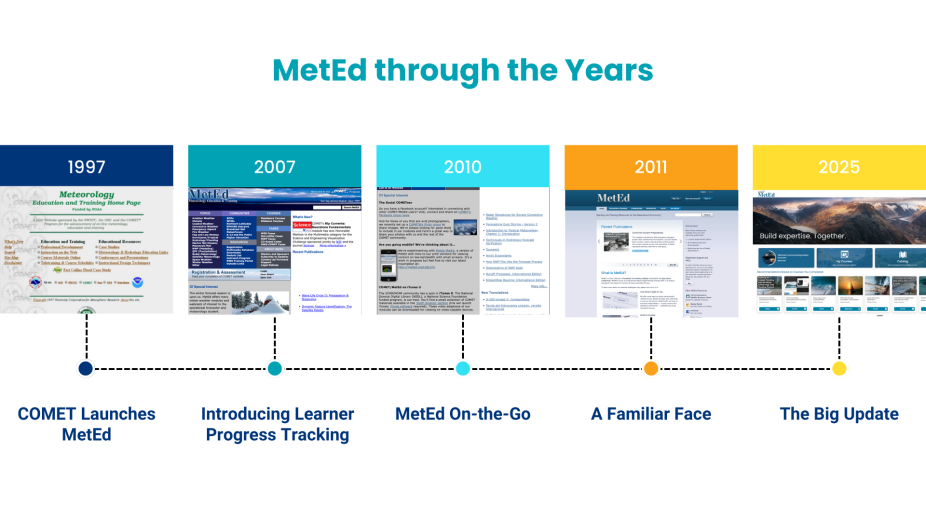
MetEd through the Years
-
1997: COMET Launches ESS Online Learning
COMET launched MetEd in 1997, a free repository of courses previously available on LaserDisc and CD.
-
2007: Introducing Learner Progress Tracking
In 2007, we added an online registration system to provide the NWS and other sponsors with staff training data and enable universities to record their students’ progress.
-
2010: MetEd On-the-Go
As people started using smartphones for just about everything, COMET relaunched another version of MetEd with mobile support in 2010.
-
2011: A Familiar Face
In 2011, we updated MetEd to its longest-lasting version to date, remaining in place until the big redesign in 2025.
-
2025: The Big Update
The latest version of MetEd launched in June 2025. The current version boasts new features, including a personalized learner dashboard, AI tools to recommend courses based on learners’ history, stronger progress tracking, and more.
As of November 2025, COMET MetEd offers more than 1,000 online courses spanning more than 20 Earth System Science topics. We offer courses and resources in 9 languages, and currently have over 27,000 active users taking 170,000 to 185,000 total courses a year.
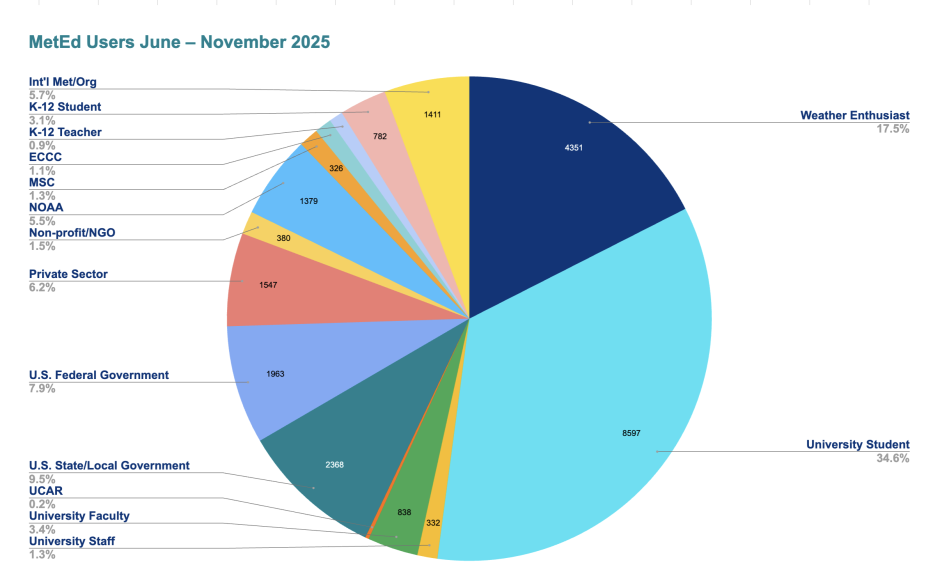
This graph shows the different types and number of users on the new platform for MetEd.
COMET Develops Decision Support Modules
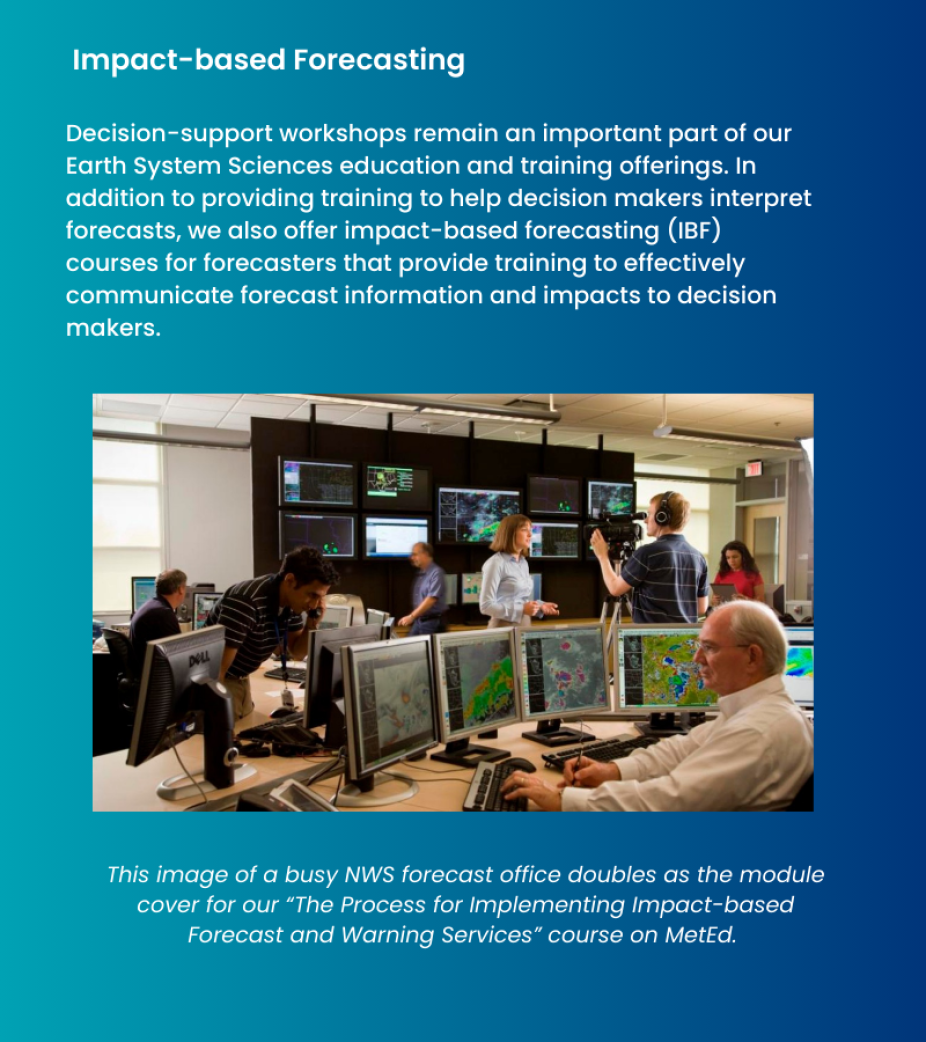
The period between 2000 – 2003 saw the start of our Decision Support training. Most of our courses before this focused on training aspiring and professional forecasters. There was a growing need, however, to train emergency managers and other decision makers on how to use these forecasts to better protect their communities.
So began our foray into community hurricane and hazardous weather preparedness courses. During this time, we also created our first K – 12 course, entitled Hurricane Strike!™ This would go on to receive the 2003 American Meteorological Society’s Louis J. Battan Author’s Award.
COMET Launches Hybrid Learning
The first few years of the new millennium saw the start of what would become our hybrid (blended) learning courses. We began by reworking the extensive and complex content of our residence classes with the smaller, more operationally-focused content of our distance learning modules to create webcasts for distribution beyond the COMET classroom.
From 2006 to 2007, we expanded this concept into a virtual training of our COMAP Boundary Layer Symposium, a fire weather development course, and a workshop on multimedia development for university faculty. This format enabled almost twice the number of learners (97 total) for the three events than possible in a classroom-only setting and saved participating universities and agencies a significant amount in travel expenses and time from the office.
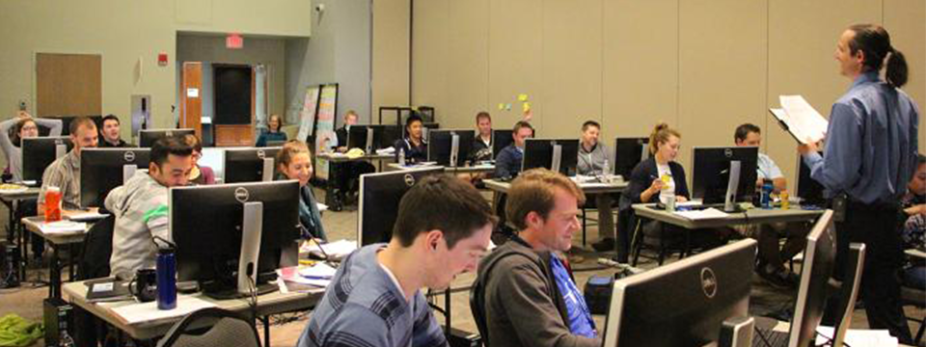
COMET educational designer Tsvet Ross-Lazarov teaches the synchronous portion of a COMET course in the COMET Classroom in Boulder, Colorado.
COMET continues to offer these hybrid learning experiences in addition to our online and in-person courses. This blend of asynchronous and synchronous learning enables us to customize learning experiences based on the needs and budgets of our clients.
COMET Bridges Academic Research and Operational Practice
The COMET University Partnership Program (UPP), formerly the outreach program, paired weather service personnel with university scientists. Created to facilitate the transfer of research results in academia to operational practice within forecast offices—a key goal of MAR—the UPP provided funding for applied research studies conducted by universities in partnership with operational forecasting offices.
Though currently on pause, the COMET UPP has funded more than 350 projects. As a result, the program helped shape the careers of future forecasters, sparked the creation of new forecast products and processes, and more.
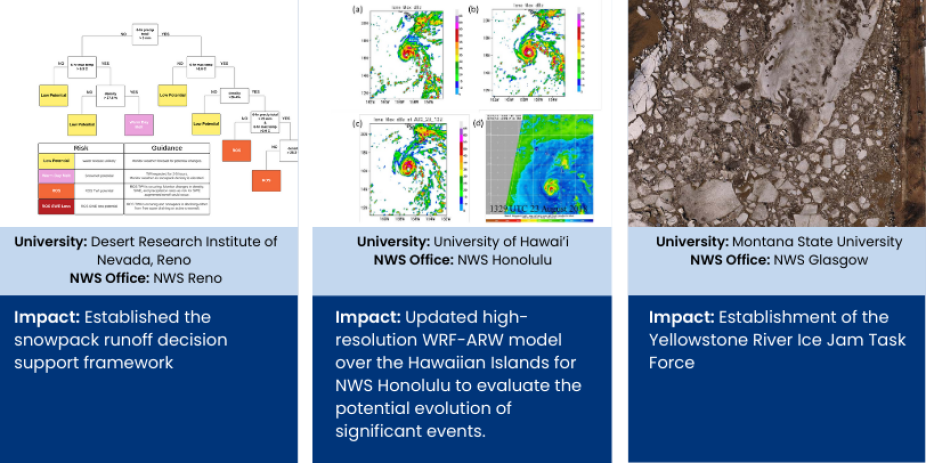
Current ways we provide targeted university support include our university-style learning experiences, such as curricula, interactive data tools, and teacher webinars.
COMET’s Audience and Impact Grow
When COMET began, we had three primary audiences (the NWS, U.S. Navy, and Air Force). Over time, COMET expanded our reach to become a vital resource for numerous sponsors, international agencies, university partners, and weather enthusiasts alike. NOAA remains our primary sponsor, but longtime sponsors and partners also include the Meteorological Service of Canada (MSC), European Organization for the Exploitation of Meteorological Satellites (EUMETSAT), U.S. National Science Foundation, Eumetcal, the World Meteorological Organization (WMO), meteorological service departments around the world, and more.
With these new sponsors and audiences, COMET also grew beyond meteorology to include courses across the Earth System Sciences, including training for U.S. Geological Survey (USGS) hydrotechnicians. We also became a popular resource for audiences outside of academia and professional organizations through our online courses for storm spotters and weather enthusiasts, and with our partnership with Girls Who Chase.
The COMET Innovative Capacity Development Program
We also expanded our services to provide end-to-end early warning systems support across the globe with the launch of the COMET Innovative Capacity Development Program (ICDP). ICDP evolved and grew from the International Extension and Public Alert System (IEPAS) in 2014 and focuses on five major areas of capacity development: low-cost environmental sensor development and implementation, numerical weather prediction (NWP) cloud computing applications, impact-based forecasting and warning services, implementation of innovative research and technology into societal applications, and competency-based educational resource development and training solutions.
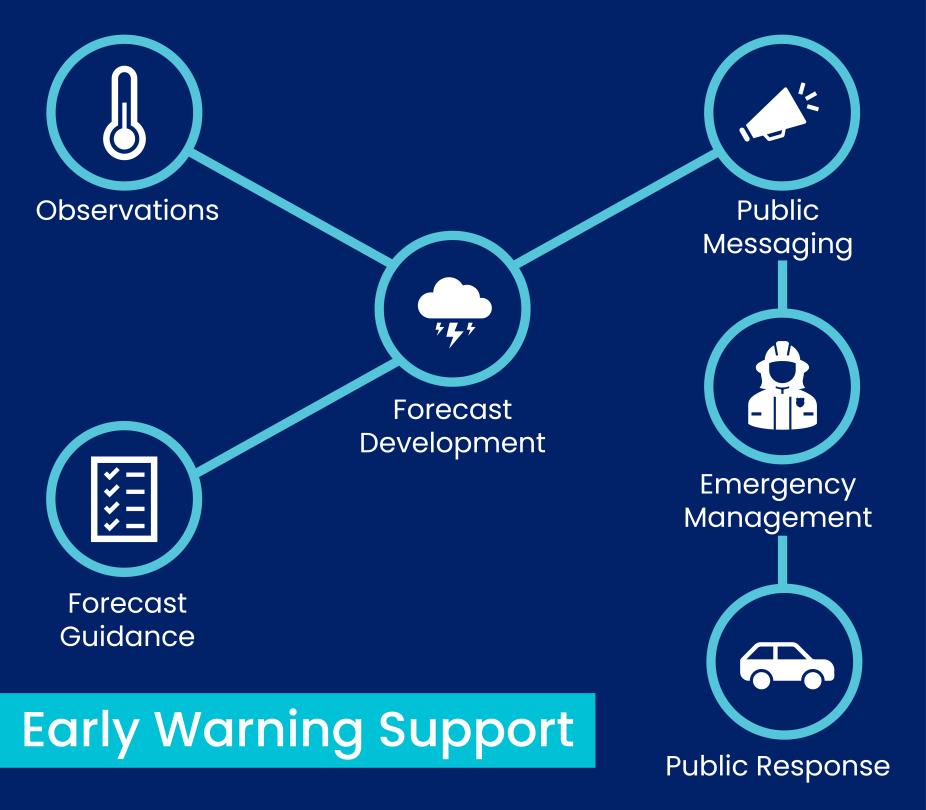
The COMET Innovative Capacity Development Program (ICDP) provides end-to-end early warning support, especially for rural and data-sparse communities.
Communications Tools and Observation Solutions
Growing out of a program called RANET (Radio and Internet for the Communication of Hydro-Meteorological and Climate Related Information) in 2009, IEPAS focused primarily on projects to improve rural and remote communication of meteorological information. IEPAS established solutions for a wide range of communication issues, including the development of communication tools, training of stakeholders, and development of observation solutions and management of pilot projects.
The program continues to work in parts of Africa, Asia, the Pacific region, Central America, and the Caribbean. ICDP continues to support RANET/IEPAS initiatives such as the Sponberg Chatty Beetle, the Emergency Manager Weather Information Network (EMWIN), and the High Rate Information Transmission (HRIT) standard, adopted by the World Meteorological Organization (WMO) for the rebroadcast of meteorological satellite imagery.
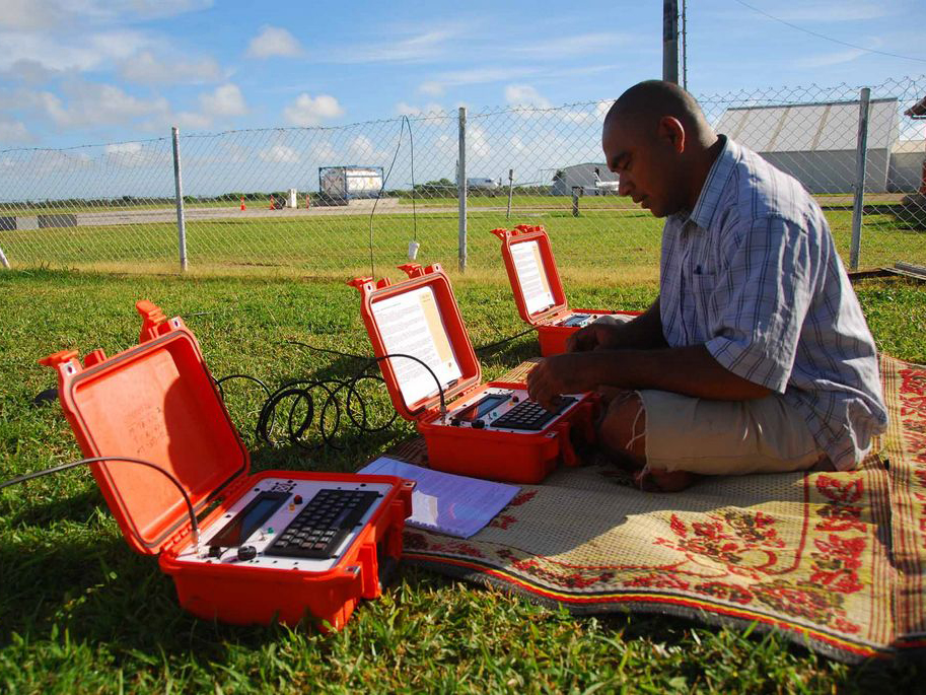
ICDP has managed the Chatty Beetle program since 2009. The Chatty Beetle provides a critical emergency communication interface that is designed to operate in remote locations and under difficult environmental conditions.
3D-Printed Automatic Weather Stations (3D-PAWS)
COMET ICDP is best known for our 3D-Printed Automatic Weather Stations (3D-PAWS), surface weather stations that can be manufactured in about a week at a cost of approximately $500, using locally sourced materials, micro-sensor technology, low-cost microprocessors, and 3D printers. With support from the U.S. National Weather Service International Affairs Office (NWS IOA) and the U.S. State Department, we partner with National Meteorology and Hydrological Services (NMHSs), universities, the WMO, and other entities to expand access to 3D-PAWS, deploying systems in more than 20 countries.
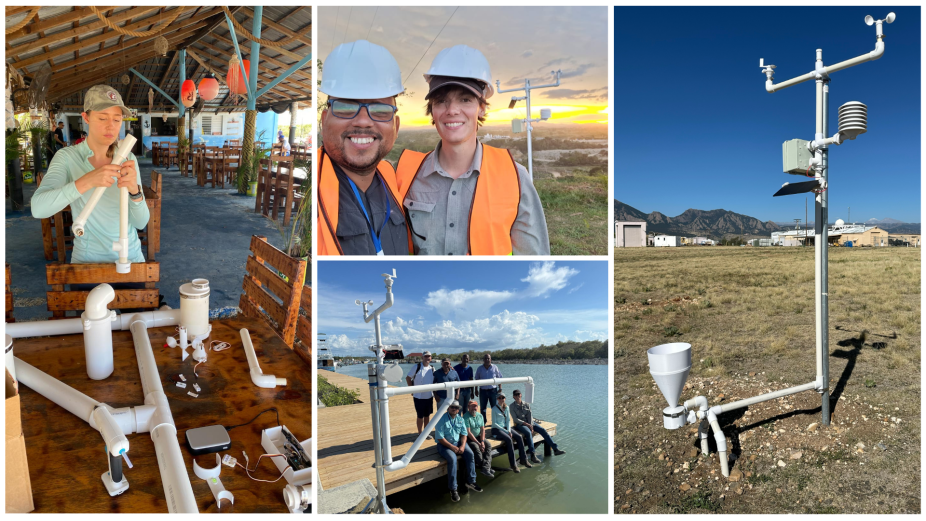
Our ICDP team in the Dominican Republic, Turks and Caicos, and the Bahamas. On the right is our current 3D-PAWS model, standing in the NCAR Marshall Field Site, Boulder, CO.
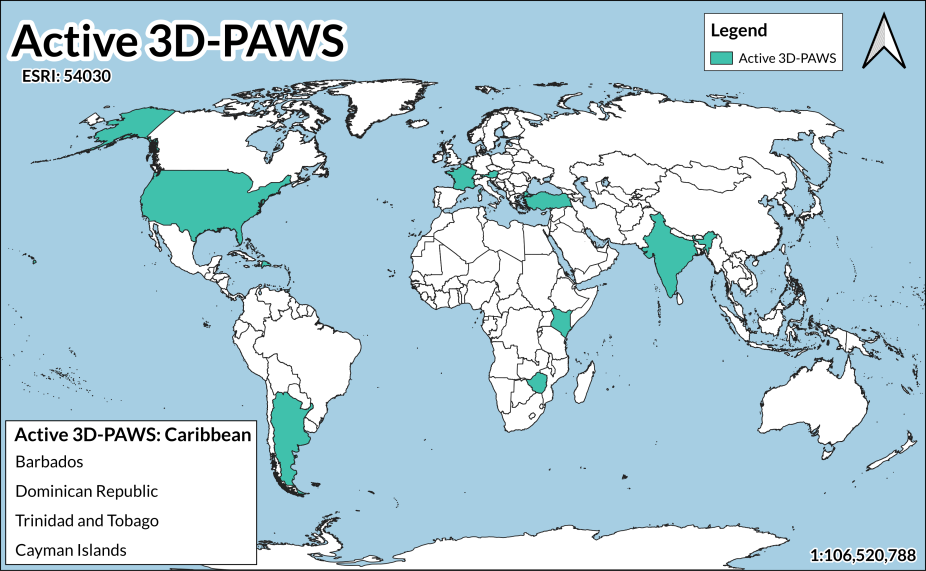
A map of the 20+ counties with active 3D-PAWS stations as of November 2025.
Famine Mitigation Support
COMET partnered with the Famine Early Warning Systems Network (FEWS NET) in 2023 to deploy 3D-PAWS in eight African countries to enhance their food insecurity products. As of August 2025, the Kenya Meteorological Service has built 52 stations, and the Zimbabwe Meteorological Services has built 17 stations. These stations monitor rainfall to predict droughts and get ahead of food shortages. They also monitor heat stress and wind conditions to protect communities.
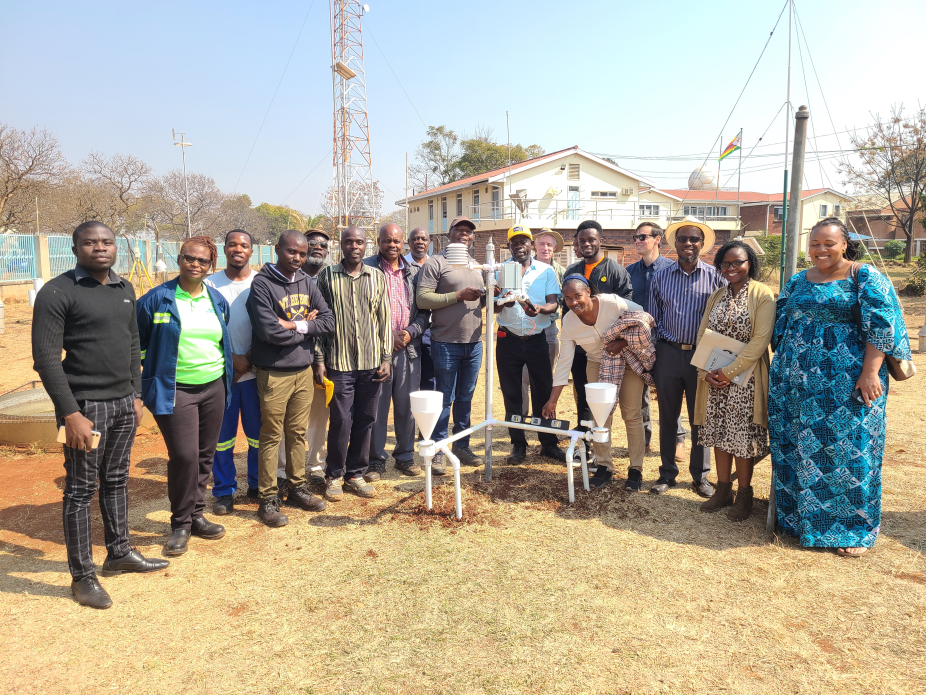
The Meteorological Services Department of Zimbabwe and COMET members with a modified 3D-PAWS with two rain gauges designed for FEWS NET in 2024.
End-to-End Early Warning Support
In 2025, we launched a Multi-hazard Early Warning System (MHEWS) demonstration with the Instituto Dominicano de Meteorologia, consisting of a standard 3D-PAWS, standalone rain gauges, soil moisture sensors, and stream and storm surge gauges in the Dominican Republic. MHEWS integrates hazard monitoring observations, forecasting input, disaster risk assessments, communication tools, and preparedness plans that enable governments, communities, and individuals to take timely action to reduce disaster risk in advance of hazardous events.
Thank you for 35 Years and Counting!
What started as a five-year project to support the implementation of MAR became a 35-year program that serves as a cornerstone for Earth System Science education and training around the world. When COMET first started, we primarily existed as a professional meteorological training program for the NWS, Navy, and Air Force. Now we provide free online education and training across numerous Earth System Science fields, deploy weather stations across the globe, support universities, and so much more.
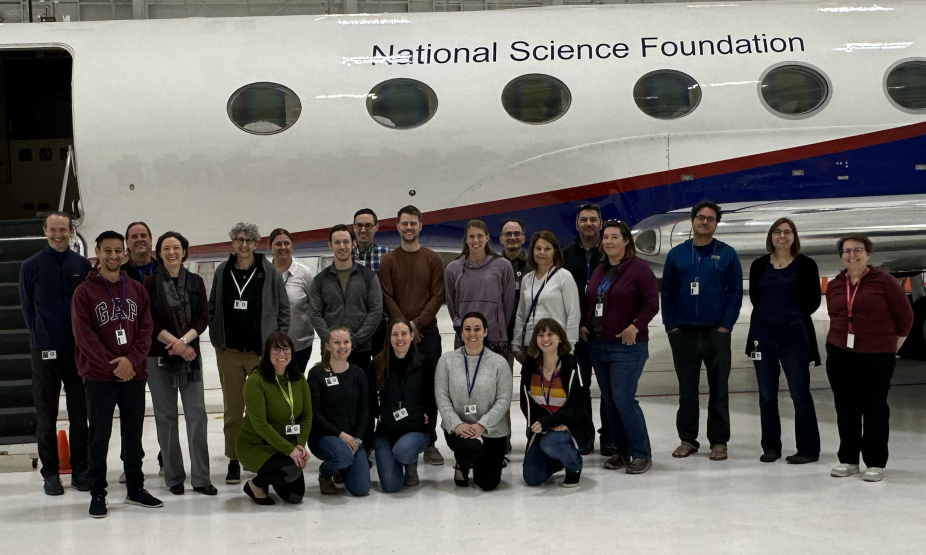
The COMET team at the NCAR Research Aviation Facility in October 2024.
This growth wouldn’t have been possible without our sponsors, partners, and—most importantly—our learners. Chances are, if you read this far, you’re one of our supporters. Thank you for allowing us to serve the Earth System Science community these past three decades.
We can’t wait to see what another 35 years will bring for COMET and our communities.
Sources
Johnson, V., R. Jeffries, G. Byrd, W. Schreiber-Abshire, E. Page, B. Muller, and T. Alberta, 2015: Celebrating COMET’s 25 Years of Providing Innovative Education and Training. Bull. Amer. Meteor. Soc., 96, 2183–2194, https://doi.org/10.1175/BAMS-D-14-00276.1.
Spangler, T. C. (2004). The COMET Program: A Decade of Professional Development for Our Civilian and Military Weather Services. American Meteorological Society 13th Symposium on Education, Education and Training for Government and Military Meteorologists. January 2004.
Dills, P., Stevermer, A., Mancus, T., Guarente, B., Alberta, T., & Page, E. (2019). COMET’s Education and Training for the Worldwide Meteorological Satellite User Community: Meeting Evolving Needs with Innovative Instruction. ISPRS International Journal of Geo-Information, 8(7), 311. https://doi.org/10.3390/ijgi8070311
Valle, D. (2020). The NWS Modernization and Associated Restructuring - A Retrospective (Part 1). https://vlab.noaa.gov/web/nws-heritage/-/the-nws-modernization-and-associated-restructuring-a-retrospective-part-1-